
The Morning Everything Goes Quiet
It usually starts the same way. You hit the opener button on your way to work, and instead of the familiar rumble, you hear a loud bang from overhead, or nothing at all. The door won't budge, or it only lifts a few inches before stopping dead. You look up and see it — a gap in the coiled spring above the door, or a spring that's stretched and sagging instead of coiled tight. Now the car's stuck in the garage and you're googling prices on your phone in the driveway.
Spring replacement is one of the most common garage door repairs, and also one of the most misunderstood when it comes to cost. Here's what actually goes into the number.
National Price Ranges for Spring Replacement
These are general ranges, not a quote for your door — your actual price depends on the door size, spring type, and condition of the rest of the system.
- Single torsion spring replacement: roughly $150–$350
- Both torsion springs replaced (recommended as a pair): roughly $250–$450
- Extension springs (the kind mounted along the horizontal tracks): roughly $100–$300
- High-cycle or heavy-duty springs for larger, heavier doors: can run higher, often $350–$600+
Torsion springs sit on a shaft above the door and are more common on garages built or upgraded in the last couple of decades. Extension springs run along the tracks and are more common on older setups. Both wear out — torsion springs typically a bit later than extension springs — but neither lasts forever.
What Pushes the Price Up
- Replacing only one spring when both are worn. Springs are rated in cycles, and if one broke, the other is usually close behind. Many technicians recommend replacing both at the same time so you're not paying a second service call a few months later.
- Door weight and size. Double-wide and insulated doors are heavier, which means stronger (and pricier) springs.
- Hardware damage caused by the break. A snapped spring can bend tracks, damage cables, or strain the opener's gears if the door was forced. Any of that adds parts and labor.
- High-cycle springs. If you open your garage door many times a day, a standard spring (rated around 10,000 cycles) wears out faster than a high-cycle spring (often rated 20,000–100,000 cycles). The upgrade costs more upfront but can mean years between replacements.
- Access and age of the system. Older, rusted, or non-standard hardware sometimes needs extra parts to bring the whole assembly up to a safe, working condition.
What Brings the Price Down
- Catching the wear early — a spring that's sagging or making noise is cheaper to replace calmly than one that snaps and takes a cable or panel with it.
- Scheduling the full repair in one visit rather than a diagnostic trip followed by a separate repair trip.
- Standard-size, standard-weight doors, which use off-the-shelf spring sizes instead of custom orders.
What a Real Quote Should Include
A quote that's just one number tells you very little. Ask for one that spells out:
- Spring type and size (torsion or extension, wire gauge, length)
- Whether one or both springs are being replaced, and why
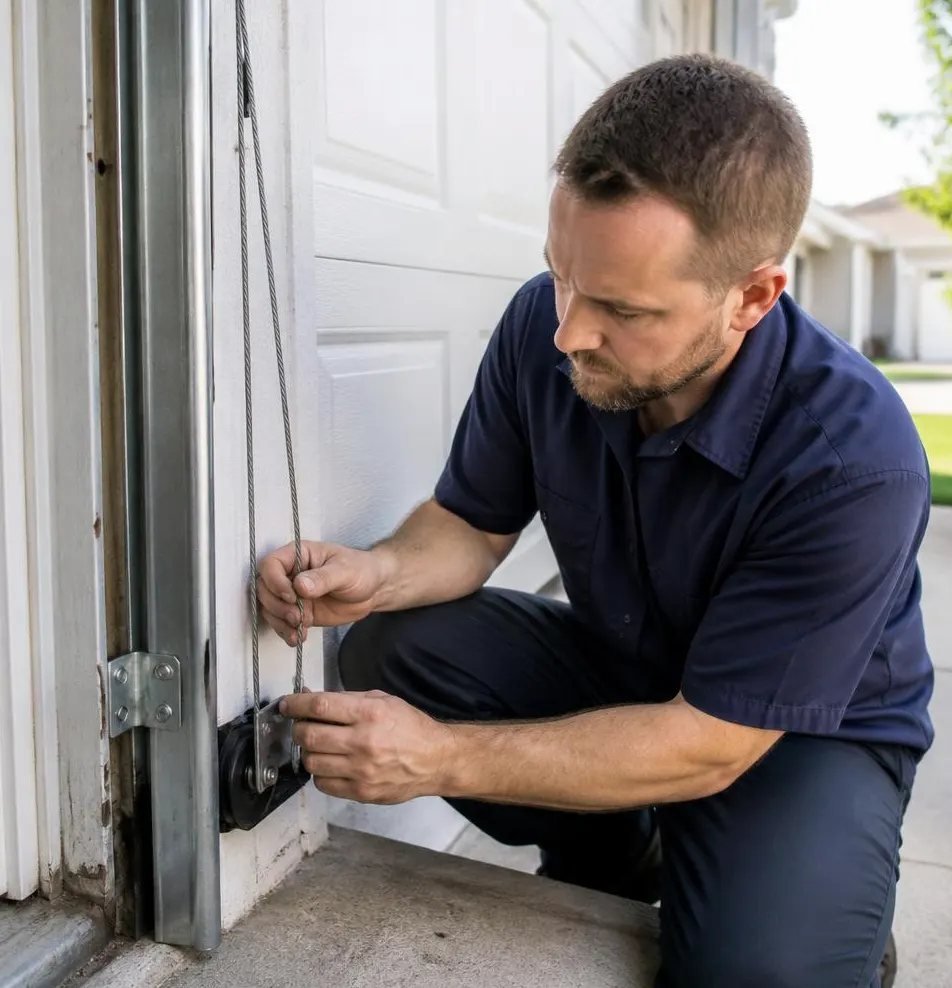
- Whether cables, pulleys, or rollers need replacing at the same time — these wear alongside the springs and are often replaced together
- Labor and any service call fee, itemized separately from parts
- What's covered if something fails again within a set time frame
If a quote can't answer those questions, that's worth asking about before you agree to the work.
Why Springs Wear Out Faster Here
Brevard County's climate isn't kind to garage door hardware. Salt air near the coast speeds up corrosion on springs and the metal brackets holding them, humidity causes swelling in wood-trimmed doors that puts extra strain on the spring system to lift, and the heavy wind-load rules for garage doors in hurricane-prone areas mean doors and their hardware are built to handle serious force — which also means the springs supporting that weight work harder year-round. A spring that's rusted or pitted from salt exposure is more likely to snap without much warning, so a yearly look at the coils isn't a bad habit to get into before storm season each year.
When to Call Cocoa Garage Door Repair
If your spring has already broken, don't try to force the door open or closed — that's how cables snap and panels bend. If it's sagging, noisy, or the door feels unusually heavy to lift by hand, that's your window to get ahead of a full breakdown. Cocoa Garage Door Repair handles garage door spring repair and garage door cable repair together when needed, since a worn spring often means worn cables too, and we'll walk you through exactly what we're replacing and why before any work starts.
If you're dealing with a broken spring or a door that's acting off in Cocoa, Rockledge, Merritt Island, or anywhere nearby in Brevard County, give Cocoa Garage Door Repair a call for an honest, itemized quote and a same-day fix where possible.