
The Morning It Won't Budge
You hit the remote on your way out and the door hesitates, groans, or only lifts a few inches before stalling. Or maybe it looks fine but moves noticeably slower than usual, like something is dragging along the bottom. Some mornings the door even feels glued to the concrete slab for a second before it breaks free with a thud. None of this means your garage door hates cold weather — it means moisture, salt air, or a worn component is making the whole system work harder than it should.
Cocoa doesn't get true winter, but a run of cooler, damp mornings after overnight rain or heavy dew is common from late fall into early spring, and that combination of moisture and a brief temperature drop is exactly when a sluggish door shows up. Here's the order a technician would actually check things.
1. The Bottom Seal Stuck to the Slab
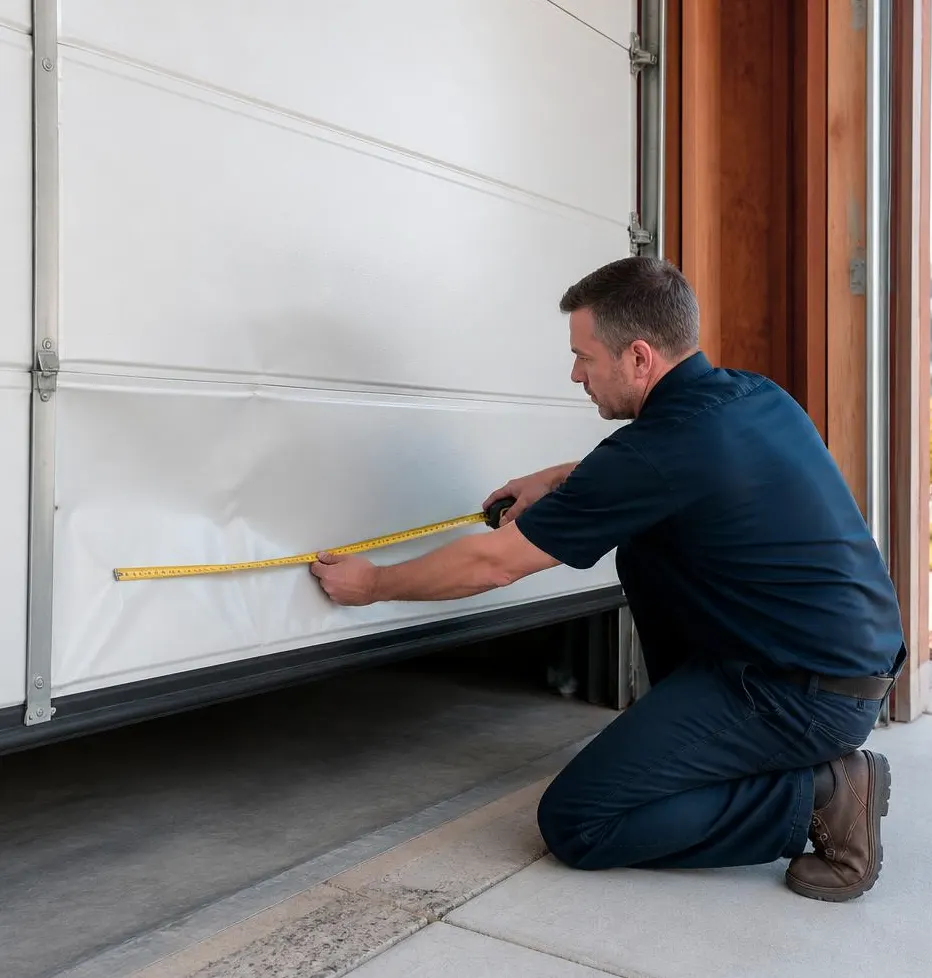
This is the first thing worth ruling out, because it's the easiest fix and the most common cause of that "frozen to the ground" feeling in a Florida garage. The rubber weatherstripping along the bottom of the door absorbs humidity and rainwater over time. After a wet night, it can swell slightly and press flat against the concrete, creating just enough suction or friction to make the door feel stuck for a moment when it starts to lift.
What the fix involves: wiping down the seal and the slab, checking for debris or sand caught in the track of the seal, and replacing the weatherstripping if it's cracked, flattened, or no longer sitting flush. This is a low-cost part and a quick swap, but it's often overlooked because people assume the problem is mechanical.
2. Rust and Grit in the Tracks and Rollers
Next, a technician checks the vertical and horizontal tracks and the rollers riding in them. Salt air near the coast — Cocoa Beach, Merritt Island, Cape Canaveral, and anywhere close to the Indian River or ocean side — accelerates corrosion on metal rollers, hinges, and track surfaces faster than it would further inland. Add in pollen, sand, and grit kicked up by afternoon downpours, and you get a gritty film that builds up inside the tracks and turns smooth rolling into a stiff, grinding motion.
The fix is usually a thorough cleaning of the tracks with a degreaser, followed by fresh lubrication on the rollers and hinges with a garage-door-specific lubricant (not WD-40, which attracts more dust). If rollers are pitted or rusted through, they get replaced rather than cleaned, since corroded rollers will keep binding no matter how much you lubricate them.
3. Spring Tension and Lubrication Thickness
After the tracks, the springs come under inspection. Metal contracts slightly in cooler temperatures, and old lubricant on the springs and bearing plates can thicken just enough on a cold morning to slow the door's response. This is rarely the sole cause of a stuck door in a climate like Cocoa's, but it compounds whatever friction is already happening in the tracks.
A technician checks spring tension by hand and looks for visible rust, gaps in the coils, or lubricant buildup that's turned gummy. If the springs themselves are original to an older install and showing corrosion from years of humidity exposure, this is the point where spring replacement gets discussed — not because of the season, but because salt air and moisture shorten the working life of springs over time regardless of temperature.
4. Opener Settings and Sensor Misalignment
If the door moves at all but stalls partway or reverses unexpectedly, the opener itself comes next. Condensation from humid nights can settle on the photo-eye safety sensors near the bottom of the tracks, causing the opener to think something is blocking the door and stop it mid-cycle. A technician wipes down both sensors and checks that they're still aligned, since a bumped sensor is often mistaken for a bigger mechanical problem.
Beyond the sensors, the opener's force and limit settings get checked. If the door has been dragging due to track friction for a while, some openers compensate by increasing force automatically, which masks the real problem until it gets worse. Resetting these settings only helps once the actual drag has been addressed upstream.
5. Cables and Hardware for Wear
Last, the lift cables and their connection points get a visual check. Fraying, rust at the drum, or a cable sitting slightly off its groove can all create a hesitation or uneven movement that feels like the door is sluggish rather than obviously broken. Because cables carry serious tension, this is inspected but not something to test or adjust by hand.
When to Call Cocoa Garage Door Repair
If you've wiped down the sensors and the seal and the door is still dragging, stalling, or making that stuck-to-the-slab thud, it's worth having it looked at before the friction wears down a roller, cable, or spring that was otherwise fine. We handle Garage Door Tune-Up & Maintenance visits specifically for this kind of thing — cleaning and lubricating tracks, checking spring tension, and catching early corrosion before it turns into a bigger repair. If a roller or track has already come off its path from the extra strain, we also handle Off Track Door Repair so the door runs smoothly again instead of just getting forced back into place.
If your garage door in Cocoa, Rockledge, Merritt Island, or anywhere else in Brevard County is sticking, dragging, or groaning on these cooler mornings, give Cocoa Garage Door Repair a call. We'll diagnose it, fix what's actually causing the drag, and get it moving the way it should before the problem gets more expensive.