
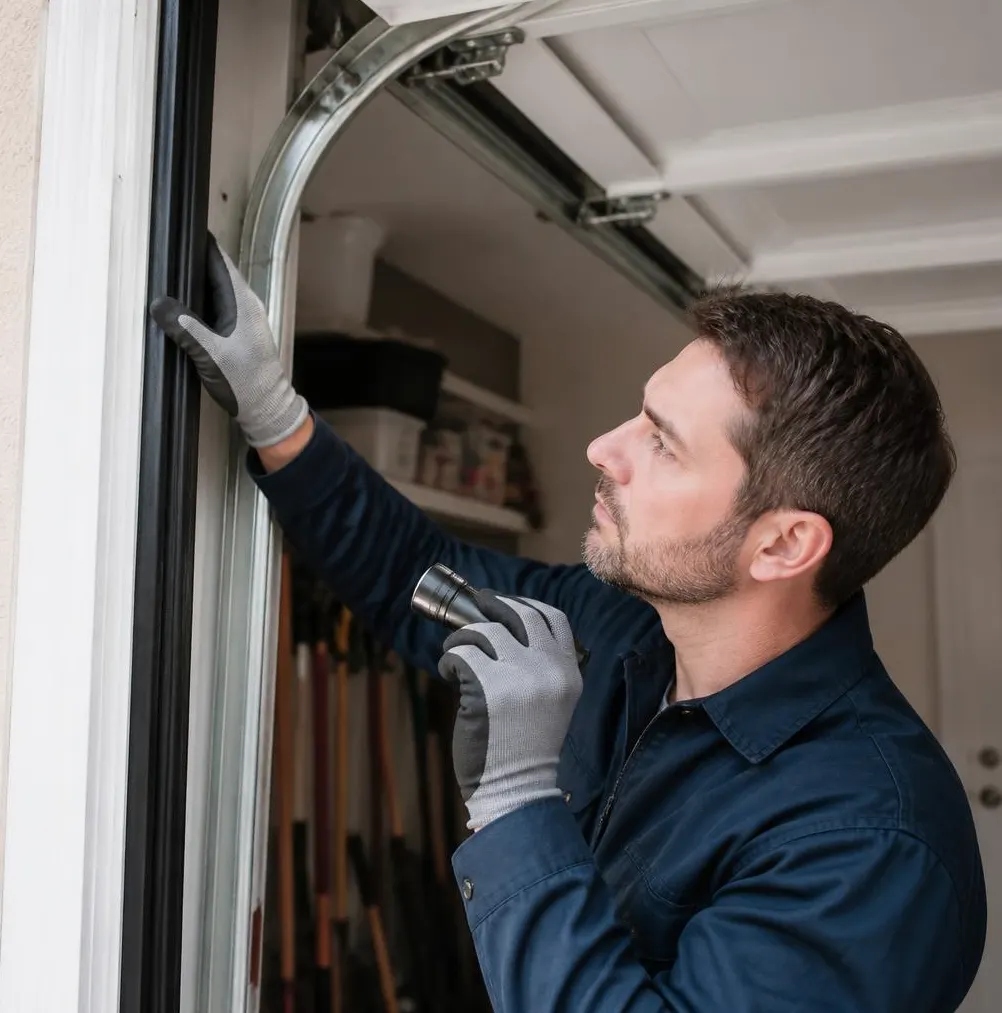
Rule of thumb: once hurricane season winds down in late November, walk your garage door top to bottom before the cooler, drier months settle in. The exceptions are homes closer to the coast, where salt air keeps corroding hardware no matter the season, and older doors that took a beating during storm season and may have damage you haven't noticed yet.
Cocoa doesn't get a true winter, but the shift from humid, storm-heavy fall to drier, cooler air still affects your garage door. Materials that swelled with moisture all summer start to contract. Hardware that got rained on repeatedly during storm season has had months to rust quietly. And after a hurricane season, there's a good chance something got jostled, loosened, or stressed even if your door never failed outright.
Check the Weatherstripping Now, Not After It Fails
The rubber seal along the bottom of your door and around the frame does double duty in this climate: keeping out wind-driven rain in summer and keeping out cool drafts and pests in winter. After months of heat and humidity, that rubber can get brittle, cracked, or pulled loose from its track.
- Look for gaps where daylight shows through along the bottom edge.
- Press the weatherstripping with your thumb — if it feels stiff or crumbly instead of pliable, it's past its useful life.
- Check the corners first. That's where seals typically fail before anywhere else.
Replacing worn weatherstripping is inexpensive and takes an afternoon, but a cracked seal left through winter lets in cooler, damp air that speeds up swelling in wood panels and rust on metal hardware.
Lubricate Hardware That's Had a Rough Few Months
Hinges, rollers, and tracks take a beating during Florida's rainy season, especially if your home is close enough to the coast to catch salt air. Salt accelerates corrosion on exposed metal, and even homes further inland deal with rust from sheer humidity.
A simple lubrication pass now does a lot of good:
- Use a silicone-based lubricant, not WD-40, which attracts dust and grime over time.
- Hit every hinge pivot point, roller shaft, and the track itself.
- Wipe down visible rust spots on hinges or tracks before they spread — a quick wire brush and a dab of rust-inhibiting lubricant can buy you another season before replacement is necessary.
Why This Matters More Heading Into Winter
Cooler, drier air actually makes metal contract slightly, which can reveal binding or stiffness that humidity was masking all summer. A door that moved smoothly in August might suddenly feel like it's grinding through a rough patch once temperatures drop — that's often dried-out lubricant combined with hardware that's slightly out of alignment from a summer of use.
Inspect Hardware That Took Storm Stress
If your area saw any tropical weather this year, your garage door's wind-load hardware — the reinforcing struts, track brackets, and anchor bolts — absorbed real stress even if the door held up fine. Loose bolts and slightly bent brackets don't always show symptoms right away.
- Walk the full length of each track and check that mounting brackets are snug against the frame.
- Look at the horizontal struts on the back of the door panels for any visible bowing.
- Test the auto-reverse safety feature on your opener by placing a block of wood in the door's path and closing it — it should reverse immediately on contact.
These checks matter more in Brevard County than in a lot of other places, since wind-load rated doors and hardware are only as good as their installation and upkeep.
Rebalance and Retest Before Cold Snaps
Florida winters bring the occasional cold front, and garage doors that are slightly out of balance tend to show it when temperatures drop and metal parts contract.
- Disconnect the opener and lift the door manually halfway — it should hold its position without sliding up or down.
- If it drifts, the spring tension is off and needs adjustment.
- Check that cables sit evenly in their drums with no fraying or slack on either side.
A door that's out of balance works the opener harder, which shortens its lifespan and increases the odds of a mid-winter failure right when you're trying to get the car out for a holiday trip.
Don't Skip the Opener's Battery Backup
If your opener has a battery backup for power outages, test it now. Afternoon downpours and storm season can leave backup batteries drained or degraded without you noticing, since the opener runs fine on regular power the rest of the time. A quick test — unplug the unit and confirm the door still opens and closes — takes two minutes and saves a headache later.
When to Call Cocoa Garage Door Repair
If your walkthrough turns up a door that won't hold its balance, hardware that's visibly bent or rusted through, or a seal that's beyond a simple swap, it's time to call in a professional rather than push through the season with a compromised door. We handle Garage Door Tune-Up & Maintenance visits that cover exactly this kind of seasonal check — hardware, balance, lubrication, and safety features — plus Garage Door Cable Repair if we find fraying or slack that's more than a quick fix. We'll give you a straight answer on what needs attention now versus what can wait.
Get your garage door squared away before winter settles in — call Cocoa Garage Door Repair today to schedule a tune-up anywhere in Cocoa, FL and the surrounding Brevard County area.